Installation Checklist
Connecting to MS SQL Server
Connecting to source data stored on a Microsoft SQL Server database. See also ETL+ Source Driver for Microsoft SQL Server.
-
If you haven’t installed ETL+ yet: ETL+ Deployment Instructions.
-
Login to ETL+ (help here).
-
Adding a new SQL database: On ETL page’s left panel, click
Add Source->MS SQL Server. -
Maintaining a MS SQL source: On ETL page’s left panel, right-click the MS SQL source →
Properties. -
On the Microsoft SQL Server page:
-
The
Aliasbox will be automatically populated, but you can customize it. -
Server name: the MS SQL Server instance name or IP address. -
Authentication: select the correct one and its credentials if applicable. Read-only rights required. -
Database name: The name of the SQL source database .-
Click the
Refreshicon on the right to load the list of database names. -
Use the
dropdown listand select the correct one.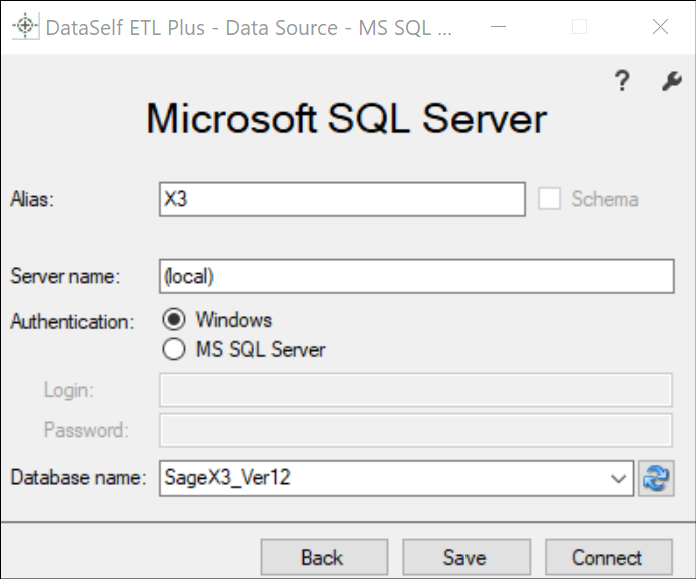
-
-
Click
Connect.
-
You’ll get back to the ETL page and see tables under the new SQL source on the left panel.
For more see ETL+ Source Driver for MySQL
Mapping and Loading Tables
-
To view tables available from your SQL database on the left panel, right-click the SQL source →
Refresh. -
To map a SQL table to the data warehouse,
double-click its nameon the left panel, or right-click on it →Add Table.-
You’ll now see the table added/mapped to the center panel.
-
-
To preview its data, right-click the table on the center panel →
Preview. -
To load its data to the data warehouse, right-click the table on the center panel →
Load Now. -
Click the
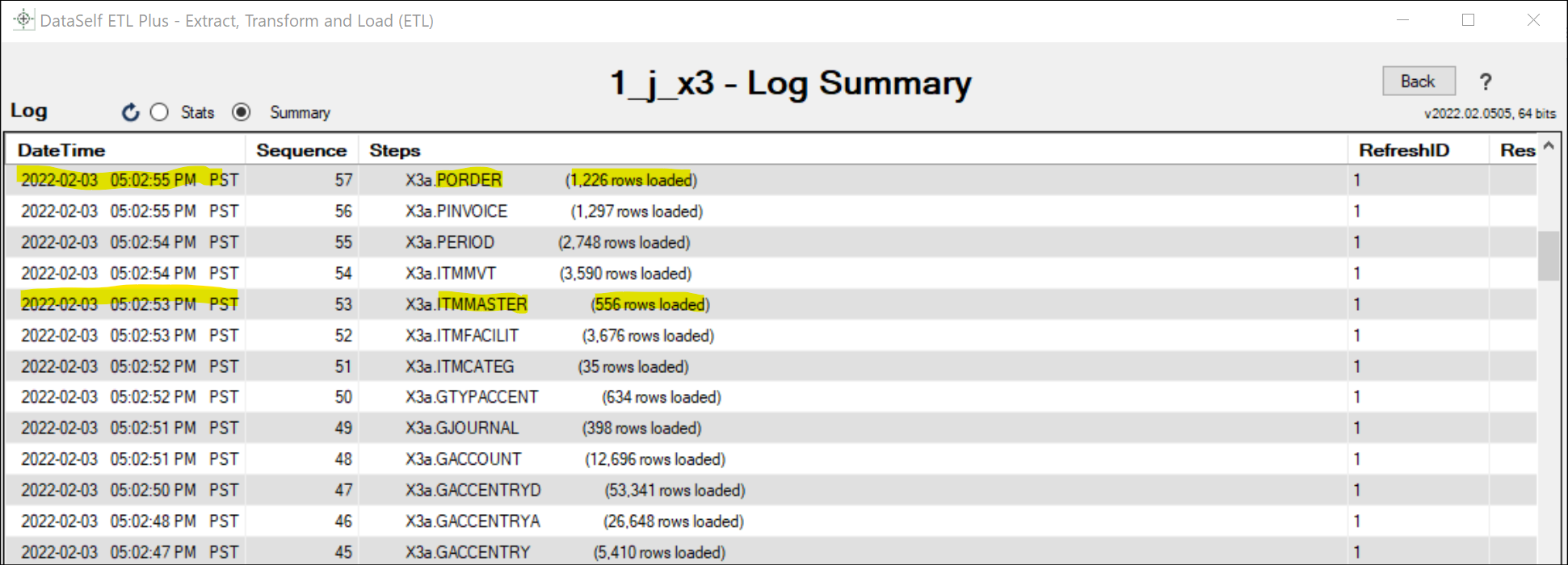
Logicon (top right) to view data load results. Log page help here.
Schedule the Data Load
-
On the ETL main page, click
Job(top right icon on the center panel). -
The Job page usually comes pre-configured to your source system(s).
-
Overview this page’s configuration. On the right panel, feel free to uncheck tables and Tableau extracts that don’t apply to your reporting needs.
-
-
Run a Job now (optional): click the
Run Job(play icon) on the left panel. -
To schedule the data load (optional):
-
Select a
Job→Job Properties(wrench icon) → configure the schedule panel →Save
-
-
Click
Close->Close.
Testing
After ETL+ has loaded your SQL tables, this is to check if the data extraction process finished successfully and row count per extracted table matches with your SQL tables.
Steps
-
Login to ETL+ (help here).
-
On the ETL main page, click the top-right
Logicon. Log page help here. -
Scroll down on the log page and double-check that no table load failed, and the row count matches with the source SQL tables. Following is an example highlighting two tables from a sample SQL database and their loaded row count.